
Episodes
May 9, 2026
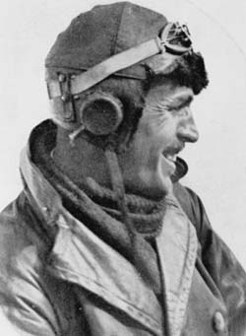
Learning to love the nauseating smell of castor oil, when you’re in a leather helmet and goggles, and bouncing about in an open cockpit
Greetings, Red Dusters. This is the 13th episode of Season Two, so I’m taking a break. But fear not, I have a dilly-bag full of tasty tales that I’ll be working up for Season Three. Now … I have a fascinating episode for you. I’ve mentioned before, that Australian aviation rose above the dust and mud, into the cold cold cold blue, to cover mighty distances. Many of you will remember Episodes Four, five and six, where I interviewed former World War 1 fighter pilot Sir Norman Brearley, who s...

12
April 26, 2026
Chuff-chuff-chuffing through the bush
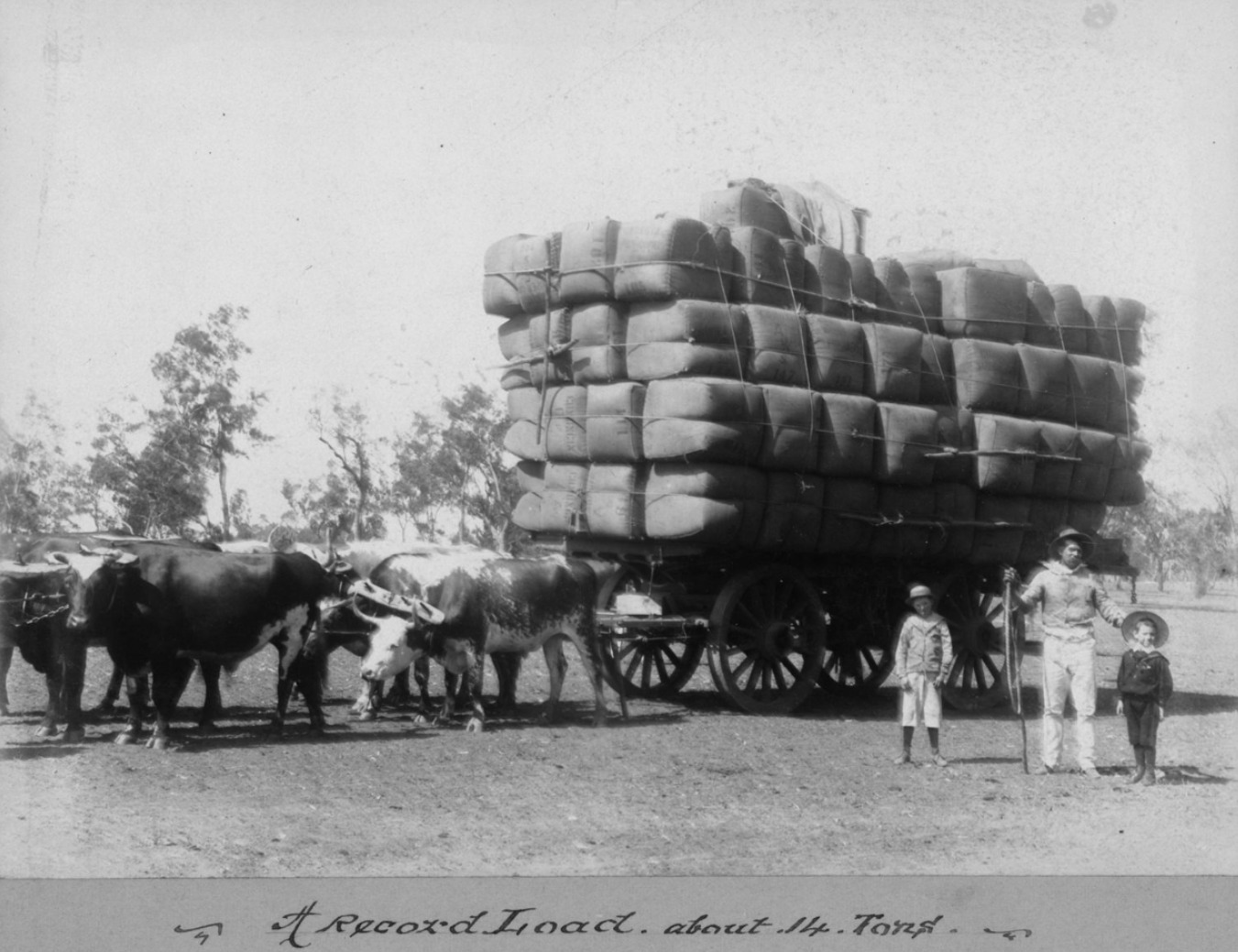
Red Dust Tapes rocks and rattles back into the early days of Australian rail. You’ll hear: A 1914 account of the flies, the dust and the mind-numbing isolation, by a man who was right there with pick and shovel for the building of the 1,710 kilometre Nullabor Railway, the Transcontinental. We visit the tiny railway settlement of Cook, in the middle of that desolate track, in the later days of diesel. It’s deserted now, but back in 1970 when I recorded there, it had a school, post office, a lo...
11
April 13, 2026
Slow Slogging Over The Horizon And Beyond: Early Australian Transport
I’ll never forget roll-yer-own, coughing, cursing, tell it as it was, Nicholas Tallack. He was a bushman of wide experience, and with a swag of stories for every one of them. Nick Tallack was my favourite yarn spinner, and in this episode of Red Dust Tapes Nick will wax lyrical about camels and donkey teams. And later, we’ll chuff/clunk/whistle our way at a leisurely pace in the boiler room and wheelhouse of Murray River paddlesteamers, in the jolly good company of stokers and captains, an...
10
March 28, 2026
Our Andy's Gone With Cattle: The story of the Drovers
Hop on your horse, let's go. And be warned: your bottom will be rubbed raw after just one a day in the saddle. And you could be heaving and swaying up there for several months. I have some fascinating people to introduce you to. Like the late, legendary Bill Gwydir, who used to drove thousands of cattle thousands of kilometres, through the sweaty monsoonal mud of Queensland, then through the heat and cold and endless sand of South Australia. Bill's stories, of a childhood raised in the saddle, ...
March 15, 2026
They're shouting GOLD all over, Downunder
In this chapter: The convict who tried a ‘fool’s gold’ trick – twice; The real gold rushes and the birth of the swaggie; The arrival of the Chinese goes off like fireworks, so here comes the White Australia Policy; Grog and mayhem on the goldfields; Duck for cover! It’s the bushrangers; Defiance, death, and Justice – the Eureka Stockade; … And to finish, a delightful interview I had with an old bloke who in the late 1890’s used to tramp up through the snow, past the gold mining camps, to ...
8
Feb. 27, 2026
The White Flood Descends
Now Red Dust listeners, I have no interviews to present to you this episode. Rather, let’s head back in time, to before recording devices were invented. Australia, as with the rest of the world, right now is in the midst of turmoil, over the significance of immigration. Our first Anoriginal immigrants trickled in while in the midst of the last Ice Age. But much, much later came a flood, of the second wave … ah ha! So here we go … In this episode … The Great South Land is dumped with rubbish fr...
7
Feb. 15, 2026
Three Dames of the Australian Bush
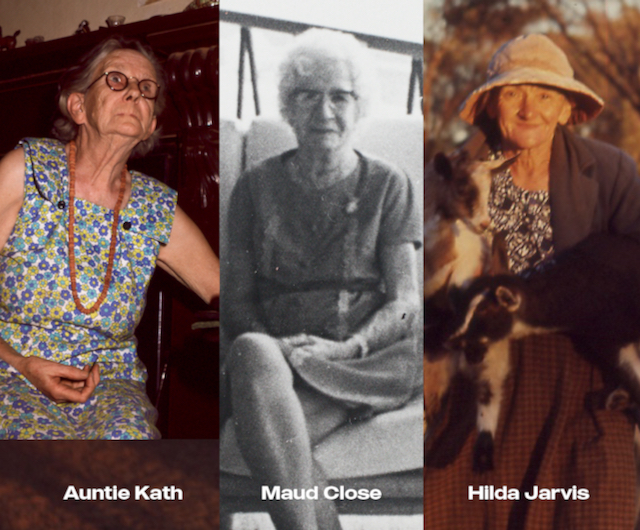
Two States, one Territory. Three isolated women, each with totally different backgrounds and motivations, tell tales about goats and ghosts and tin mines, that go back to early 20th Century Outback Australia.
6
Jan. 31, 2026
Aboriginals, Looking to The Future ... In 1972
Now I want to present to you a time capsule. It’s a radio documentary I prepared in 1972, for the ABC. Back then it’s title was, ‘The Urban Aborigine’ , and you’ll find the word 'aborigine' features strongly thoughout For many Aboriginal people, that word is no longer considered appropriate. Because of historical connotations, to use that word for indigenous Australians seems to lengthen the distance between ‘them’ and ‘us’, between me the white person, and you the black person. It’s conside...
5
Jan. 19, 2026
Maudie, Alice, and the Flower Well Mob: Brief Voices of First Australians, Deserts Apart
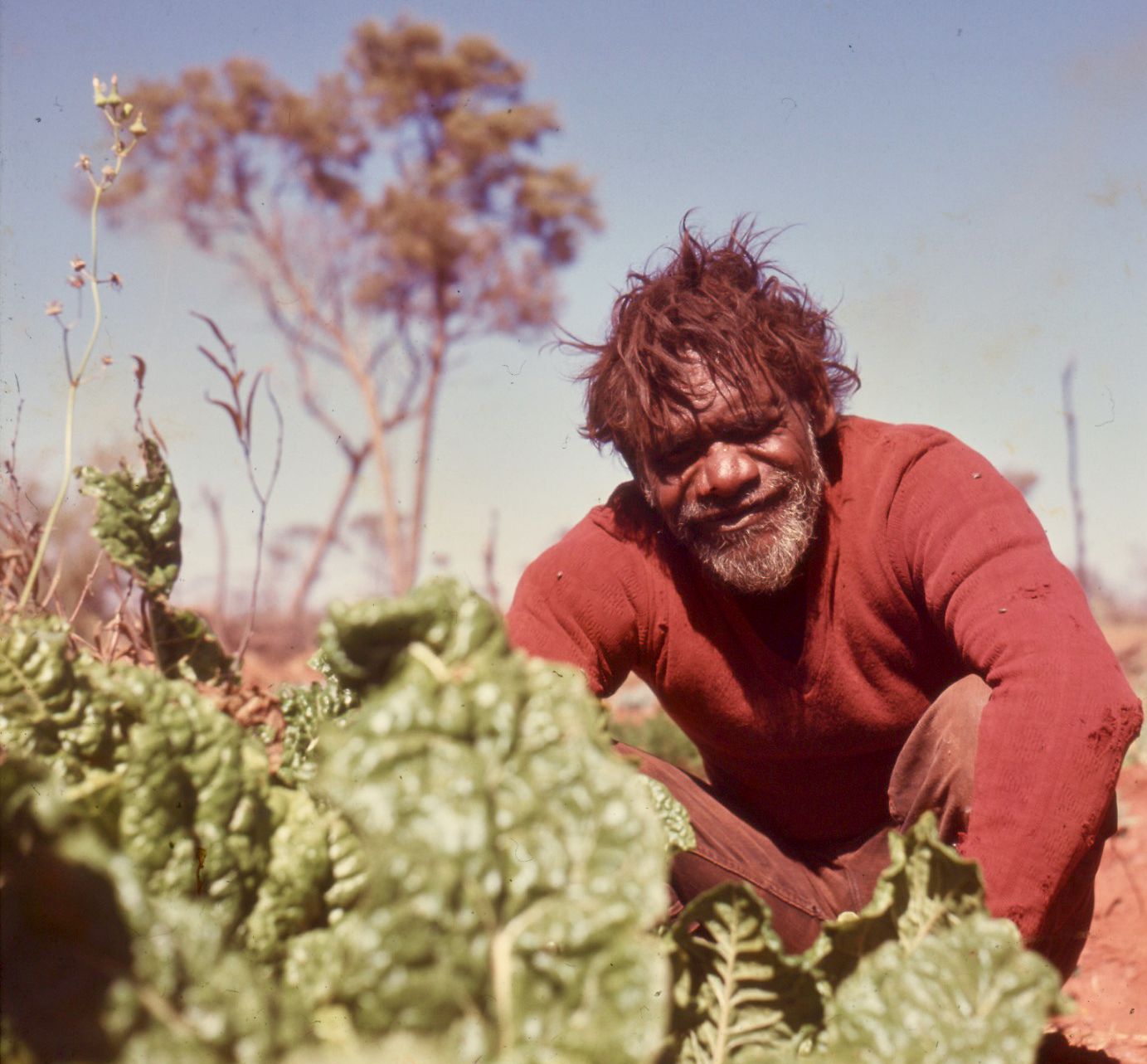
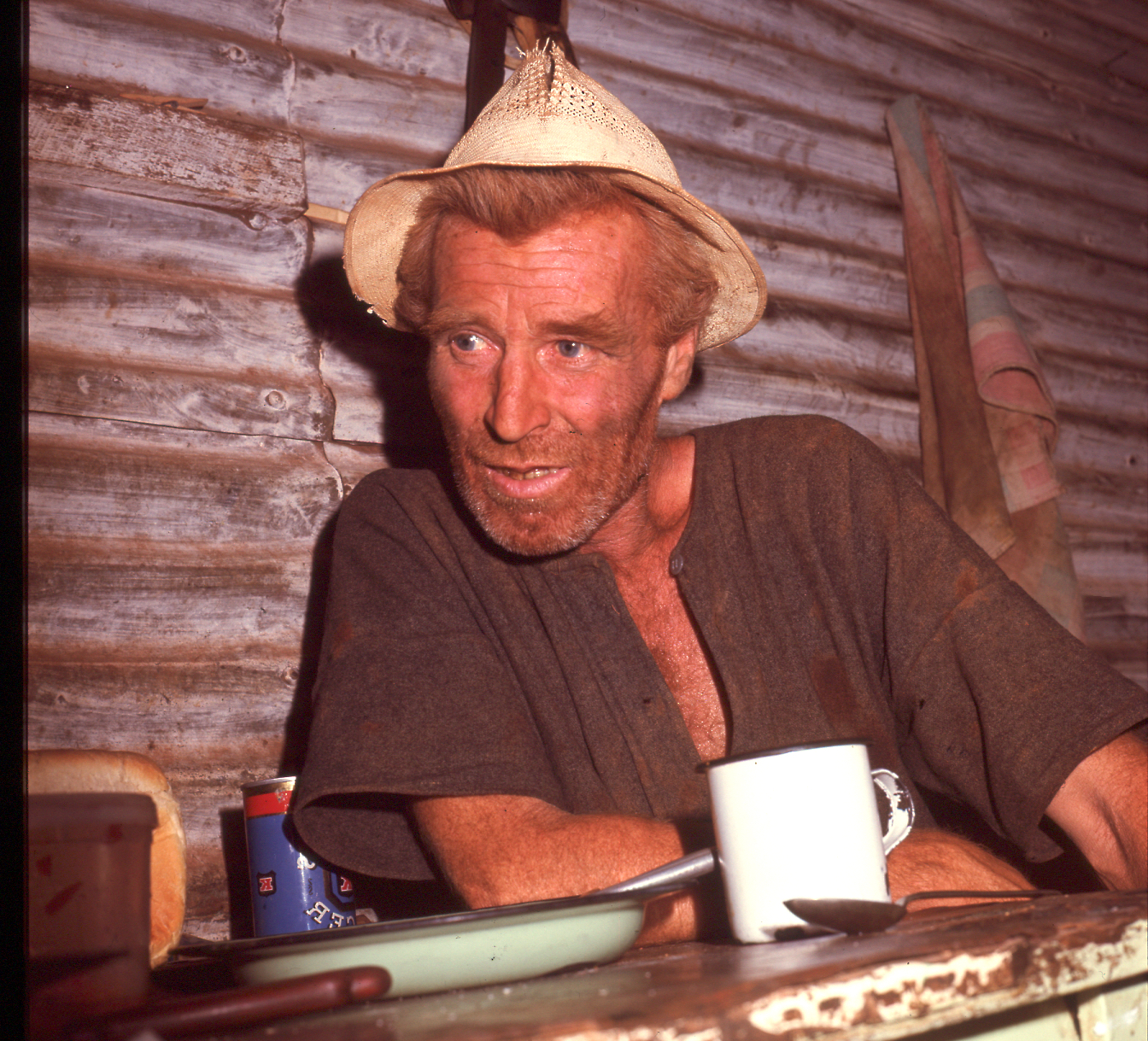
This episode has everything: A road trip. (Well, on mainly dusty tracks) across three quarters of Australia. Memorable encounters with remnants of Aboriginal tribes – two of whom were the last speakers of a number of ancient languages. The horrifying squalor of a fringe dwellers' camp, and the grief of young parents whose children were taken. The endless, almost bendless Nullabour Railway, A fascinating interview with an anthropologist – Kato Muir – who is also the descendant of s...
4
Jan. 1, 2026
The grit-faced bushie who loved a drink, and the thrill of finding floaters
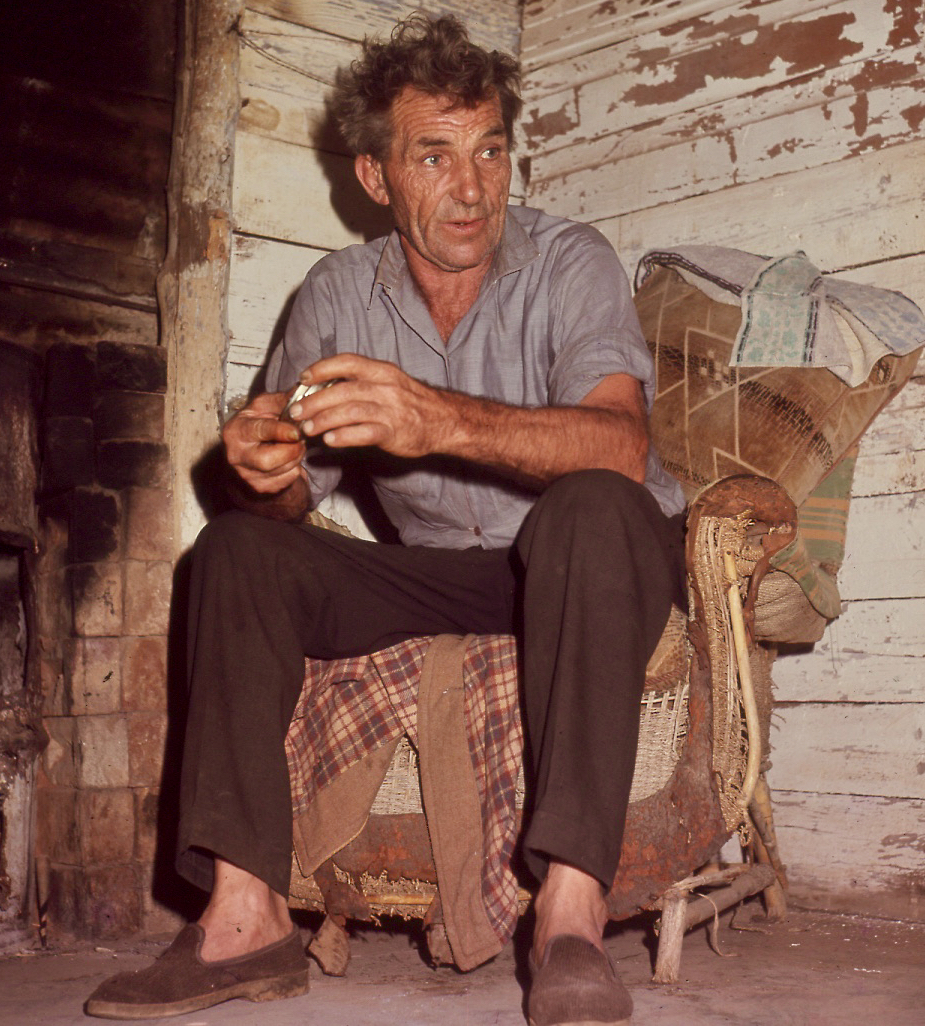
Ned Conroy, the craggy-browed Scotsman with the missing teeth and a dusty face the colour of the red earth he dug in, loved the bush, and the chase for floaters – those bits of gold on the surface – and then the dig-down search for the hidden reef. And he wasn’t perturbed by the near-miss when, in the pitch black after his lamp snuffed out, several tons of earth collapsed right in front of him. Or the time when a large snake tumbled down the mine shaft and landed on his shoulder. When I...
3
Dec. 18, 2025
Who’s the nutty one? Chasing a bus, or serenely alone?
From the age of 12 Les Craigie was a professional boxer. In our interview he compared an easily bruised apple with the delicacy of a pummelled human brain. At 21 he’d had enough of the risks, and for the next 25 years he worked deep underground in the Broken Hill silver-lead mines – to face different but equally real dangers. In 1948 Les climbed up out of the deep shafts and headed west, taking up his own silver-gold claim in the Barratta Ranges. From miner, he became a prospector. Oh sure...
Dec. 4, 2025
An Aussie engineer’s adventures in Antarctic: Pt 2
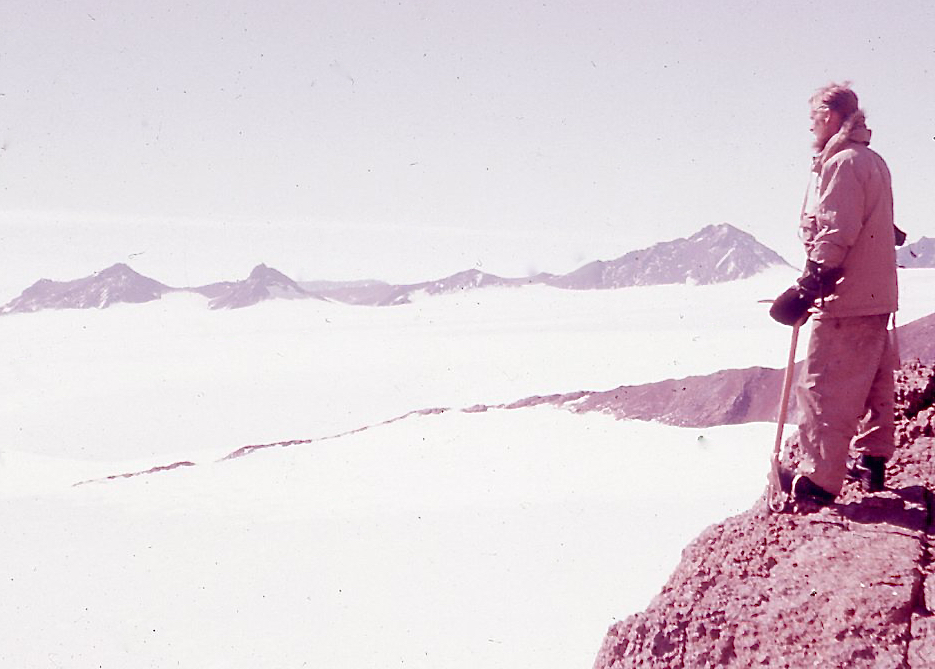
Woops. Once again, we’re a long way from the usual Red Dust Tapes Outback territory. This is the second of the two-part anecdotes of John ’Snow’ Williams, who first went to the Antarctic in 1958, at the end of the International Geophysical Year. In this era the world was gripped with the fear of nuclear war, with the United States and Russia flinging threats at each other. So it was remarkable that a year of scientific co-operation was achieved, that had many significant, and shared, outco...

1
Nov. 19, 2025
A madman, and a death in the snow
Welcome to Season 2 of Red Dust Tapes. We commence this second season as far as you can possibly get from the usual Red Dust Tapes territory, in The Land of the Blizzard, Antarctica. It’s also just 67 years ago – so far more recent than most of my tales. But John ’Snow’ Williams is a great storyteller. In this case recalling his time at Wilkes Station, in 1958, during the International Geophysical Year. This was deep into the Cold War era, with the US and Russia trading frightening t...

Aug. 27, 2024
A rare and exclusive interview with the legendary Sir Donald Bradman
THIS IS THE FINAL EPISODE IN SEASON ONE. Whoah! It seems I achieved something that the great television interviewer and self-confessed cricket nut Sir Michael Parkinson longed for, but never managed – to not just meet, but to interview the legendary, world-beating cricketer, Sir Donald Bradman. It was said that Don Bradman was ‘elusive’. Like a lyrebird in the bush, perhaps? But there was the great Don, graciously opening his office door to me, welcoming me in, and cheerfully sharing so ma...

Aug. 9, 2024
As a kid, he skinned cats and sold the meat. What happened years later at the Dolly Pot Mine?
When I interviewed Ernest Skein in 1970, I was told he had recently been let out of jail. I didn’t want to close down an interview with a fascinating old-time prospector, so when I got the message that some subjects were not to be touched, I left that one alone. It remained just a giant elephant in the tiny, hot-as-hell tin shack in which I interviewed him in Tennant Creek, in the Northern Territory. What I’ve found out recently deepens the mystery of Ernest Skein. It involves a shocking i...

July 27, 2024
The bushman with a passion for local history
PICTURED: Fred Teague leans against his dry blower, his brother George is to his left, with the gold pan. Taken on the Koonamore goldfield, South Australia, 1934. In the Depression years Fred Teague had been a gold miner and fox shooter north of the road to Broken Hill. He drove trucks for the legendary Harry Ding to Innaminka, and up the Birdsville Track, in gruelling conditions, where if you got stranded you’d better have plenty of water; and where a wrong turn could mean the end. Then i...

July 11, 2024
‘You had to overcome their fear’. Exclusive interview with co-founder of Qantas
It was bitterly cold up there, in leather cap and goggles, in the open cockpit. Turbulence in those North Queensland skies was often terrifying. Passengers could do nothing but hang on and bear it, hopefully holding something to catch the vomit. ‘Sometimes the only edifice on the aerodrome was a little tin shed’, Sir Hudson told me. ‘And on a cold morning you’d see the poor passengers making a sprint for this little tin shed.’ Sir Hudson Fysh was co-founder of the Australian flagship airli...

June 28, 2024
‘It’s a terrible crime to be a scab. A scab is worse than a murderer’
One day 1970, in the Outback town of Broken Hill, I was standing on a street corner, tape recorder in hand, grabbing sounds for a radio documentary. A short, energetic little fellow wandered up and said, ‘Hello son, what are you doing here?’ It was Frank Bartley, born 1888, who like his father before him became a miner at the Broken Hill mines. Broken Hill, they say, is the richest source of lead, zinc and silver in the world. It was also the site of three long-running workers’ strikes, th...

June 14, 2024
Both families were miners. Together they created musical gold
Last edition we met Sis McRae, the all-night fiddler from the early part of the 20th Century. Sis had just one child, Margaret McRae, who married Jim Coad. Both families had mining backgrounds. With Margaret and Jim this continued, with their barytes mine at Martins Well in the Flinders Ranges. But it’s what they achieved above ground, out there in the back country of South Australia, that is truly remarkable. Seven children, seven highly talented multi-instrumentalists. Including Peter...

May 29, 2024
More Naughty Norman, then tales from Granny McRae, the All-night Fiddler
There are two distinct parts to this episode: first, more revelations about an early aviation legend. Then, we visit Ada (Sis) Mcrae, born 1889, who recalls the hardships and joys of life in a small Outback town. SIR NORMAN BREALEY really made the dust fly with his biplane-era airline in Western Australia, but the maverick way he ran his business also raised the ire of our early aviation authorities. In this final instalment on Sir Norman, we hear of more of his brazen business antics. ...

May 16, 2024
‘I made all the rules, and I followed every one of them’. Some ’naughty bits’ on Australian airline pioneer Sir Norman Brearley.
‘They wouldn’t let Brearley look at the bodies. A women said it was the first time she’d ever seen a man cry.’ World War One dogfighter Major Norman Brearley was the first off the ground with an airline in Australia, dramatically changing the lives of people in Outback Western Australia. Major Brearley had been ruthless and cunning in the skies over the Western Front, and was the same in business. In this second episode on his establishment on Western Australian Airways, two researchers fr...

May 1, 2024
From WW1 ace fighter pilot, to starting Australia's very first airline
Within a few short years after the First World War, over the heads of horses donkeys camels and bullock teams, a new sound could be heard in Australia’s interior: the droning and spluttering of aircraft. First it was the 'barnstormers' offering thrills and first flights to small country communities. Then came airmail services, then passenger routes were opened. It was Sir Norman Brearley, with his Western Australian Airways who first made it to airline status, with a route from Geraldton to th...

April 17, 2024
Chasing opals since the 1920s, while paddling his own dusty canoe
Opal miner Franko Albertoni was born in 1883. He was 88 when John Francis interviewed him in 1971, but still jumping around in the crushing heat like a little pixie. In 1920 Franko and his brother were among the very early miners at the Coober Pedy Opal Fields in South Australia. Then in 1930 they were among the first 12 to dig for opal in Andamooka. Franko was still living in the same mud and stone hut they had built there. A hut so tiny he just had room for one chair, and so dark, he coo...
April 10, 2024
Cranky camels, murderous mules, and a swarm of swaggies
It was 1919, and Charlie Gill was 12 when he started work on a cattle station east of the Flinders Ranges in South Australia. It was a tough but joyous life for a boy. Charlie was an acute observer, with the memory of a steel dingo trap, and a great way with words. In this 1968 interview he talks of sleeping rough when mustering, of dealing with cranky camels, on the dingo hunt, the joy of working with cattle, and why donkeys are sweeter than mules. As a 21 year-old Mr Gill joined the police f...