

 Apple Podcasts
 Spotify
 iHeartRadio
 RSS Feed
 Amazon Music
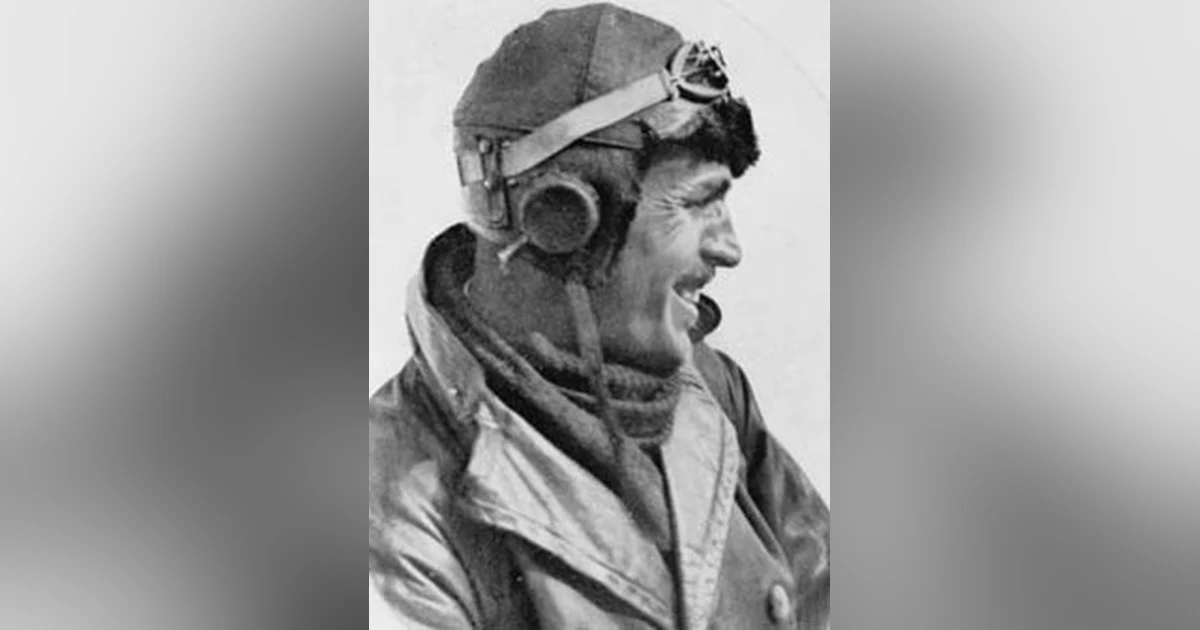
 Learning to love the nauseating smell of castor oil, when you’re in a leather helmet and goggles, and bouncing about in an open cockpit
Greetings, Red Dusters. This is the 13th episode of Season Two, so I’m taking a break. But fear not, I have a dilly-bag full of tasty tales that I’ll be working up for Season Three.
Now … I have a fascinating episode for you. I’ve mentioned before, that Australian aviation rose above the dust and mud, into the cold cold cold blue, to cover mighty distances.
Many of you will remember Episodes Four, five and six, where I interviewed former World War 1 fighter pilot Sir Norman Brearley, who started Australia’s very first airline, West Australian Airways.
And Episode 9, ‘You had to overcome their fear’, When Sir Hudson Fysh, another World War 1 veteran, shared anecdotes about his years co-founding Qantas.
Both airlines were not started in the big cities, but in the regions, and the Outback.
So this time, I’ve got a real beauty for you, from someone who was not just a skillful and daring aviator, but a cracker of a yarn-spinner…
Earlier on this Red Dust Tapes audio journey, we’ve had fascinating interviews with the founder of Australia’s first airline, Sir Norman Brearley, and the co-founder of the world’s longest running international airline, Qantas.
We’re going back to the earliest Qantas years.
It gives me great pleasure to introduce you to Lester Brain, one of the very first Qantas’ pilots. Lester really became the backbone of the company’s flying, and later administrative team.
He was often in the middle of the action, achieving many firsts, and gaining distinguished flying awards along the way.
It was a few chapters ago, but remember when Sir Norman Brearley of West Australian Airlines, way across the other side of Australia, was talking about his jostling to be the chosen airline to partner with Britain’s Imperial Airways for Australia’s first international airline?
Brearley lost out. To Qantas. So came about another two highly significant firsts for Lester Brain. Including being the first to pilot a flying boat from England to Australia, then to fly them regularly back to the other end of the world.
Then when Japanese Indian Ocean aggression ramped up towards the middle of World War Two, Broome, on our North-west coast, started to become very busy. Many evacuees from the Dutch East Indies began arriving.
Broome also had a harbour suitable for flying boats.
Lester was now running the Broome Qantas base.
With a rising level of aircraft in Broome from the Royal Netherlands Air Force, the RAAF, and also Qantas, Lester became very wary of a possible Japanese attack.
It happened on March 3, 1942.
Nine Japanese Zero fighters strafed the harbour with cannon. Twenty four aircraft were destroyed, on land and in the harbour. An estimated 70 people were killed.
On the attack day Lester Brain was suffering from fever. But it didn’t stop him. He rowed into the harbour with another airline person and rescued 10 people in the water.
Once the enemy fighters had cleared off, Lester ordered an undamaged Qantas flying boat 60km south to Port Hedland, where it would be safer.
Lester also helped in the search for survivors of an American B-24 Liberator bomber that had been shot down.
For his efforts, Lester Brain received the King’s Commendation for ‘brave conduct at Civil Aerodromes’
He later was awarded the rank of wing commander.
Then came the era of the Double Sunrise. To avoid the Japanese to the east, a route between Perth and Galle, in Ceylon (now Sri Lanka) was chosen.It meant flying over one of the widest, featureless parts of the Indian Ocean. Water, water everywhere.
When the flight was later extended to Karachi (now in Pakistan), it became the longest non-stop flight in the world at that time, taking between 27 and 33 hours.
Yes, a flight that saw the sun come up twice. The Double Sunrise route.
09:14 - Burning Castor oil, and a yearly crash-land
17:13 - The curse of hot days, cold flying, raging dust and no communication
27:03 - Safety trumps gung-ho
29:48 - The other Qantas founder got bored
32:16 - Comparing cost of aircraft
34:54 - Amusing tale of the isolation
38:56 - The beginning of the Flying Doctor
41:33 - Flying coffins, free of superstition
49:27 - Long distance kangaroo hopping
01:00:17 - The elegance of flying boats
01:07:12 - World War Two: the Japanese attacks
01:10:55 - The Double Sunrise Catalina flights
SPEAKER_03
Greetings, red dusters. You'll gather from the way that I'm speaking that I'm not your ideal podcasting voice at the moment. That's because I have a few medical issues. No, no, it's not the big sea, and my mates at the swimming pool are proper old timers who actually swim, as opposed to walking up and down and punching the water with their flotation barbells, which is all that I'm capable of at the moment. Anyway, this is the thirteenth episode of season two, so I'm taking a break. But fear not, I have a dilly bag full of tasty tales that I'll be working up for season three. Now, I have a fascinating episode for you. I've mentioned before that Australian aviation rose above the dust and mud into the cold, cold blue to cover mighty distances. Many of you will remember episodes four, five, and six, where I interviewed former World War One fighter pilot Sir Norman Braley, who started Australia's very first airline, West Australian Airways. And episode nine, You had to overcome their fear, when Sir Hudson Fish, another World War One veteran, shared anecdotes about his years as a co-founder of Qantas. Both airlines were not started in the big cities, but in the regions and in the Outback. So this time I've got a real beauty for you from someone who is not just a skillful and daring aviator, but a cracker of a yarn spinner.
SPEAKER_00
So I will remember uh flight lieutenant Brownell, who was one of the uh veterans of World War One and was one of the instructors, and he said, Well, look, I'll tell you something. He said, When I started to fly, I experienced the same trouble. He uh he said, I talked to myself and I said, Now I I like a I like flying, I like everything to do with flying. Now, this smell is something to do with flying. Therefore, I like that smell. And he said, I convinced myself of that, and he said, I had no more trouble. And you know, I tried that and did the same thing, hung my head over the side, inhaled these fumes, and thought, that's the smell of flying, I like it. And I convinced myself and I had no more trouble.
SPEAKER_03
Learning to love the nauseating smell of castor oil when you're in a leather helmet and goggles and bouncing about in an open cockpit. It gives me great pleasure to introduce you to Lester Brain, one of the very first Quantas pilots. Lester really became the backbone of the company's flying and later administrative team. He was often in the middle of the action, achieving many firsts and gaining distinguished flying awards along the way. Lester Brain was a wonderful storyteller. So sit back and enjoy.
SPEAKER_00
Well, I was um working when I left school in the bank, a commercial bank in Sydney, and um it was not really my cup of tea. All my um my ancestors, my father, and all his brothers were not lawyers, doctors, or schoolmasters. The whole lot of them were engineers of one sort or another. My own father was a mining engineer. Other brothers and uncles of his were um civil engineers, electrical engineers, and so on. Somehow it's born in your blood, so something engineering and mathematical was more my cup of tea. So I saw an advertisement after I'd been in the bank for three years. I saw an advertisement from the Royal Australian Air Force calling for applications for cadet ships in the RAAF, the object being to uh do one's training, get the Air Force pilot's wings, and uh then get transferred to the Air Force Reserve and be available for civil aviation duties. And uh this appealed to me tremendously, and uh there were four vacancies, and together with seven hundred others I uh put in for uh put in my application and was fortunate uh they increased the number to five, but anyhow I was one of the five, and uh so at the age of uh nineteen, in December 1922, I finished up uh down in Melbourne uh to commence a cadet ship in the RAAF at Point Cook, which was number one course after World War I. And what did uh your family think of the idea of you becoming a pilot? Well, I I well remember uh my father was dead, and I discussed this matter in 1922 with uh my uncle, who was a very well-known electrical engineer, and later was one of the uh commissioner for railways in New South Wales, and uh he turned to me and said, But my boy, what future is there in it? I could see two things. One was that he was disgusted to think that um, well, his nephew uh was going to do something as crazy as that instead of something respectable and professional. And uh his attitude was uh just the same as if I told him that I had an ambition to be a uh a circus trapeze artist. Well, was this the general attitude of of the public in those days? Well, the general attitude, of course, was that uh you were if you took up flying uh and intended to persist with it, you were just um definitely uh attempting to um commit suicide within five years.
SPEAKER_04
What about your own attitude, though? If you became a member of the RAAF, you must have had a certain amount of faith in aviation.
SPEAKER_00
Well, um it wasn't to become a member of the RAAF, actually uh going and getting my training with the RAAF was uh a means to becoming a a commercial pilot. I I personally, although I was young, had a great uh confidence that um commercial air transport was coming and was going to be an enormous thing in the future. And um I felt that by going to the RAAF, well, I got my uh my cadet my pilot training uh free. In fact, I was paid four pounds a week as a cadet. Um I uh then I also felt that if there were another war, the first great world war had just ended, that if there were another war, I wanted to be a pilot in the Air Force and not a gunner or uh an infantryman or the in the Navy. I definitely wanted to become a a pilot in the Air Force, and I felt, well, if I get my training, get my pilot's wings, and then as the advertisement offered, go on the reserve of officers of the Air Force, if another war happened, I'd be into it as quickly as anybody. And that in fact I'd have uh if a few years went by, I'd have more flying experience than if I remained in the Air Force.
SPEAKER_04
Well, so you joined the RAAF and got your uh your wings. What was the the experience like this first time in the air?
SPEAKER_00
Well, uh, the aircraft we were uh training on were the old rotary engine Davros, where the cylinders all flew round on the uh rotary engines, which were clergy's and laurones. Actually, the aircraft I did my first solo on was one made in Australia by uh the Australian Aircraft and Engineering Company, which was uh owned and founded by Nigel Love. And um so that uh anyhow, after 14 months at Point Cook, I emerged uh having uh gained my commission in the Air Force and my pilot's wings, and uh I uh then I I actually I topped the cadet course, and so the first uh civil job flying air mails was offered to me um early in 1924. So at the age of 21 and um three months, I uh went off up to Western Queensland and joined Quantas as a mail pilot in the good old uh cap and goggle open cockpit days. And uh prior to that, Qantas had been flying uh scheduled services for 16 months. They commenced flying scheduled services in November 1922, and uh I started flying with them in April 24. Um the pilots prior to me had been all veterans of World War I, and none of them had stayed with the company longer than six months. Uh so I came in and finished up staying 22 years. Uh that, of course, excludes uh Hudson Fish, who was the uh one of the two founders, he and McGuinness, and Hudson Fish, of course, remained right through the whole piece. But at the time I joined them, the staff was two pilots, uh, with Hudson Fisher the third man as a part-time and stand-in pilot.
SPEAKER_04
So if the others had all been World War I veterans, you were one of the first of the uh, well, can can we say apprentice pilots?
Burning Castor oil, and a yearly crash-land
SPEAKER_00
Yes, uh, definitely. I was the first of the of the new breed of post-war commercial pilots.
SPEAKER_04
This this first moment in the air, you'd always wanted to be well, you'd wanted to be a pilot. You got up in the air. What was it like that first moment?
SPEAKER_00
Well, I thoroughly enjoyed it. Uh in those days, as I said, the rotary engines, since the cylinders all flew around, there were no exhaust pipes. They uh they just exhausted straight out into the open air in the front, and because of uh rotary engines, they had to use pure castor oil as a lubricant. It was essential, something that wouldn't mix freely with petrol. And the result was that the whole of the exhaust fumes all blew down the side of the aircraft and over the windscreen and consisted of burning castor oil. Well, I think most uh children from when they're young have a uh a natural dislike and hatred of the smell of castor oil, and uh, since you were getting gallons of it in burning fumes, uh I enjoyed my first uh couple of flights, but the smell of that oil was enough to make one uh, you know, turn over. So I will remember uh Flight Lieutenant Brownell, who was one of the uh veterans of World War I and was one of the instructors, and when he asked me, I told him that I didn't mind the gyrations in the air, but that uh I had this problem, the smell of castor oil was was sickening. And he said, Well, look, I'll tell you something, he said, when I started to fly, I experienced the same trouble. So he said, I I thought, well, now uh he I he said I talked to myself and I said, now I I like air I like flying, I like everything to do with flying. Now, this smell is something to do with flying, therefore I like that smell. And he said, I convinced myself of that, and he said I had no more trouble. And do you know? I tried that and did the same thing, hung my head over the side, inhaled these fumes, and thought, that's the smell of flying, I like it. And I convinced myself, and I had no more trouble.
SPEAKER_04
You mentioned gyrations. What sort of gyrations did the plane go in for? Or did you, as the pilot, uh, make the plane perform?
SPEAKER_00
Oh, well, all the maneuvers of uh once you got up in the air, of steep turns and climbing and gliding, and of course later on of um of uh practices in in spinning and recovering from spins, which was part of the uh routine training that every pilot had to go through.
SPEAKER_04
Well, you can imagine this today on a more modern aircraft with fairly sleek lines, but what was it like back in the we're still in the barnstorming era in with planes of uh of paper and wood? What was it like with the wind whistling through these wires doing rather uh dramatic turns?
SPEAKER_00
Well, of course, uh I regard those days as being the the days when you you really felt you were flying. It was like sitting on the witch's broom and going through the through the air with the breeze and tearing at your cap and goggles and flying with uh leather gloves to keep out the cold, a big woolly scarf round your neck, and a leather coat and the cap and goggles. And uh you really got the the true feel that that you personally were flying, not that you were traveling in a uh big enclosed uh flying hotel as almost the aircra big aircraft of today. And of course, when it came to any sudden maneuvers, well, you did them in those days, uh maneuvers that uh you wouldn't think of doing in, say, a modern Boeing 707. That would be quite uh out of order. But uh the other thing, of course, was that uh I suppose in flying today, many a pilot, many a captain, uh will see his whole life through flying one a modern aircraft without ever experiencing a forced landing. A real forced landing as such, he might have to divert to another airfield due to weather, but uh not uh real forced landing uh as such, whereas in those days, my first um uh ten years of flying or 11 years of flying was all done in open cockpit single-engined aircraft. And I'd average uh about every 12 months almost with regularity, a complete engine failure, in which case, of course, you had to just glide down and land somewhere, and if there was nowhere to land, you had to land anyhow. Of course, the ultimate to that, I uh I got away with uh with this time and time and again. And I told myself, well, of course, one of these days you're going to have an engine cut out, and there's nowhere to land except on the top of the trees. And eventually that happened too. And uh so uh I glided down and did all the things according to what we understood was textbook rules in those days. You um you glided down close on the top of the lowest and softest looking trees you could find, which in this case were about 12 or 14 feet high, and you did a stall just above the top of the trees. Well, since the stalling speed of the aircraft in those times was only about 45 miles an hour, a real stall, and then if you allowed for a say uh 10 miles an hour breeze, you were against the breeze. Well, your speed over the top of the trees was 35 and you pancaked into the trees. And I did that and stepped out of the aircraft uh unscathed.
SPEAKER_04
What about the aircraft?
SPEAKER_00
Well, strange to say, the uh the aircraft was a small one and and uh uh the uh it did some damage to the fabric structure of the wing. Uh it damaged the propeller, it uh did minor damage to the undercarriage, but uh we got it back to the aerodrome that was at Eagle Farm in Brisbane and it was flying again the next day. And the uh cause of the engine cutting out uh proved to be the top of the carburetor had um vibrated loose and it started to unscrew, and this um uh upset the flow of petrol and uh and flooded the the engine and caused it to cut out.
SPEAKER_04
Today, of course, DCA regulations make it very important that aircraft are kept in very, very good order. But in those days, do you think that maintenance was perhaps as exacting as it is today?
SPEAKER_00
Well, uh, yes, uh the maintenance, uh uh, particularly in in Qantas, at all events, the engineering maintenance, uh, well, I've got to thank it that I'm alive today. I think it was of a very high order indeed, and it always was. But uh still, uh engines uh as they were, uh you would get these emergency landings, and you would get uh complete and sudden uh engine failures, and uh well, down you had to come.
SPEAKER_04
What would have been some of some of the major causes of any engine failures in those days?
The curse of hot days, cold flying, raging dust and no communication
SPEAKER_00
Well, um unquestionably the biggest thing that we had in the west of Queensland, where uh uh most of my flying was done in those days, and of course it's in the tropics, and it was a very, very uh hot area, uh, and uh most of our troubles were water troubles. I mean radiator, water pumps, and boiling radiators, and uh these caused lots and lots of trouble. Um so that uh I uh had a firm belief in air-cooled engines, because I figured that if you didn't have a radiator and didn't have a water pump, well then you couldn't have uh water pump and radiator troubles. And uh that was very true. Uh when we moved over and got onto radial air-cooled engines, well, that was the end of our water troubles. And of course, as we've seen since then, one of the next greatest troubles we had were um ignition troubles with uh ignition harness, magnetos, and spark plugs. And uh, of course, the ideal way to overcome that is not to have uh ignition wires, not to have spark plugs, and not to have magnetos, which today we have in our turbine engineed aircraft, uh, which have uh which have no magnetos and no uh high-tension ignition leads and no spark plugs and no valve springs.
SPEAKER_04
Talking about uh the problems of heat, I suppose, especially in qu in Western Queensland, this would have been uh something that you'd always have to contend with.
SPEAKER_00
Uh it very much was, of course, in the tropics there, and these machines came out from England and were not made uh in the main for such uh terrifically hot climates, because in Cloncurry, for example, I've seen it there for ten days on end, where the temperature each day went up to over 114 in the shade. And during the middle of the night it would be a hundred. And uh if it dropped to ninety-five, everybody remarked on the cool change. And uh this caused us we had to have special tropical radiators made, much bigger than would be used in Europe, uh, in order to get over this um overheating problem. But as I say, the ideal way to overcome it was to dispense with uh water-cooled engines and radiators altogether and use air-cooled engines.
SPEAKER_04
In an open cockpit, the weather must have been something that the pilot uh always had to keep in mind.
SPEAKER_00
Well, getting onto the subject of uh weather, of course, first of all, dealing with what you say, um one would uh turn around and on the ground at various stops, and we must remember that our stages then were an average length of about a hundred miles. And on the ground you'd be in a bath of perspiration while you were unloading your passengers and mail and getting off again, and then a few minutes later, of course, you'd be up to five thousand feet or four thousand feet. Uh was uh quite a normal height, and uh you you'd be uh it'd be quite cool, and the uh strong wind, of course, going by, just sitting in the open with a little windscreen in front of you, and uh uh well you'd need a scarf round your neck and uh gloves and a good leather coat to keep warm. Now, so far as uh weather uh reports and forecasting are concerned, well, we just didn't have them. There were no forecasts. Uh we had no radio the first uh ten years that I was flying with Qantas from 1924 till 1934. I did uh all in open cockpit, single-engined aircraft with no radio, and it wasn't until in 1934 that we got the four-engine DH-86s that I sat in an enclosed cabin without cap and goggles, or had radio in the aircraft, or had any semblance of weather forecasts. So that we we flew, uh, nevertheless, in practically uh all weathers. I uh I can scarcely remember an occasion when weather actually prevented us getting away. But what we'd do would be uh in bad weather, either in rain or heavy rain, or uh low cloud, or the terrific dust storms that occurred in the west of Queensland, well, we'd just fly low. Uh very low, only a matter of um well, if the weather got bad enough, the the dust or the rain, well, we'd fly down at 100 feet. And we knew by this time all the country like the palm of our hand. So uh we had no uh radio aids uh or navigation aids, whatever. But we knew the country like the palm of our hand, we knew every little hill, we knew every fence and gateway almost, and you'd um go along under the worst conditions at about a hundred feet with perhaps um four hundred jars of visibility, and uh you'd just uh blind along in the pouring rain or in the dust and feel your way uh into your place you were going to.
SPEAKER_04
And also, of course, the fact that you didn't have radio must have meant that when you were out in this country, sometimes hundreds of miles from the nearest outpost, you could have uh had very many problems with communication.
SPEAKER_00
Uh yes, well, the only uh uh communication from the ports you landed at uh were by uh Bush telephone. Um and uh going back to those years, well, getting a trunk call through by telephone was bad enough, but unless you were at one of the towns you called at, if you uh did uh have to go down anywhere due to engine trouble or um just for a short while due to weather, uh due to some violent conditions, well, you were there and nobody knew where you were or what had happened to you until you got going again and arrived at the next port and uh sent a telephone message through to say that you'd been grounded for an hour or so with weather or engine trouble or whatever it was. And in some cases, of course, um one on special flights the aircraft would be missing, and uh the only means you'd ever find was to go and look for it, and which would mean a full scale search. Later on, uh I, with the cooperation of AWA, I got them to make a little portable radio in a bag, which weighed not more than 11 pounds, and included batteries and um a little transmitter and receiver, and uh you on the ground you could uh throw up a piece of wire on the end of a fishing line, a wire fishing line over a branch of a tree, and you could um uh transmit in with a Morse key and uh advise them that you were uh you'd been forced down, you were isolated, you you didn't know exactly where, but in a paddock about so many miles from so-and-so.
SPEAKER_04
When you first started off in with Qantas in 1924, what sort of what were the the conditions of employment?
SPEAKER_00
Well, the uh the contract I I had, I just dug it up the other day, uh, provided that I was paid 450 pounds a year. And um that uh that was it. The only uh thing apart from that was twelve and sixpence a day, which was supposed to cover overnight hotel and accommodation and meals. Uh the uh if one was away from base in Longreach. Um there was uh no superannuation fund. In fact, uh there was no superannuation started until after the last war, uh before they got around to having a superannu any superannuation fund. Um there was uh life insurance, well the company did nothing about it. It was up to the pilot to insure himself if he felt he was worth it. Uh, and of course, such luxuries as insurance against loss of pilot's license hadn't even been thought of. What about the insurance companies?
SPEAKER_04
How do they regard pilots as far as risk is concerned?
SPEAKER_00
Well, uh, the uh the insurance companies, when I first went to the Air Force as a cadet, uh they had a tremendous loading generally on uh on a professional pilot. But there was one company, uh the City Mutual, actually, who uh were quite unique in that they were prepared to insure me as a pilot at the normal life insurance rates because they calculated that uh what extra risk you took in flying was made up by the fact that you were physically fit. And as soon as you were weren't physically fit, well you didn't fly anymore. So they they charged the normal first class rates without uh without premium, without any loading on the premium. But the other companies actually charged at 10% loading per annum, not 10% of the premium, but 10% of the sum assured. So that on that basis they reckoned that on the average life would be not more than five years. Well, how did the pilots feel about that? Well, I don't think the pilots in those days really worried about it or gave much thought to it. I mean, you must remember that uh we were relatively young men, as far as I was concerned. I was tremendously keen. I I I'd have flown for nothing. Uh, I was so keen, and and I'd have worked in between flights to earn a crust, and I'd have flown just for the sheer joy of flying and uh in order to get experience. Um I would mention, too, that uh when I joined Qantas, my total flying hours, dual and solo, were 120 hours. Well, uh, if you compare that today, before a a pilot could become a captain with any airline today, he'd need to have uh three or four thousand hours. And uh the pilots on the major um overseas airlines uh have probably got uh six or eight thousand hours before they actually assume command. But uh so that 120 hours, which included uh dual instruction, uh, seems very small. But uh Hudson Fish, now is a Hudson Fish, he told me that when he first went out to Longreach, uh his flying hours as a pilot uh were only forty-seven. Forty-seven hours. Of course, he had a distinguished record and uh gained the DFC in World War I, but most of that was as an observer gunner. He was a uh a very remarkably good um shot, and he got his DFC for shooting shooting down the enemy, not uh for flying, which he only came in as a pilot just right towards the end of World War I.
SPEAKER_04
Well, even though you may have had very few hours comparatively the the you came you went on to become a very well known and a very proficient pilot and very uh respected within the the business. So they must have had a certain amount of faith with you even i in you even in those early days to employ you with only that number of hours.
Safety trumps gung-ho
The other Qantas founder got bored
SPEAKER_00
Uh yes, they did, and uh part of the reason, of course, was that the most of the chaps who in those days who came out of World World War I were a pretty gay, abandoned, uh reckless lot of uh almost buccaneers, and uh uh they uh they had more troubles with them keeping them under control, whereas I was a young fellow and used to discipline, and uh, well, they felt that what I lacked in experience I made up for in steadiness. Um actually, uh, when I went up, and as I say, I was uh only 21 in February, and I started flying with Qantas in April 24, and uh the pilot I was succeeding was a uh veteran of World War One, a highly uh decorated and distinguished uh veteran of World War One named uh Vigas. Uh but uh uh while he had the experience of flying many times what I had, um uh the public in those days were very nervous about flying. Uh they thought that all pilots uh were uh marvelous heroes, and uh they felt that uh anybody who um got on board the aeroplane and flew anywhere since they had to get into cap and goggles, also since they sat in open cockpits, uh even the passengers, they regarded them almost as being a hero, and anyone who said they'd flown from A to B uh was uh considered to be a bit reckless. Uh but this chappy uh being an old veteran of World War I before me, a very good pilot, but like a lot of them, he uh in between times he'd uh fly up to Cloncurry, and then it'd be two days there before he had to fly back to Longreach. And in that time he'd uh visit the bar and uh let his head go a bit, and uh well, in a little township like that, the public noticed these things, and uh they'd think, ah, I wouldn't fly with that show. My God, I saw him sort of staggering around the place and drinking. So I could see this, even though I was young, and I put on a pretty good show, that I preferred tea and not hard liquor. And uh they'd uh you'd have to go into the bar at the hotel where you were staying, and so I'd have ginger ale. Well, after I'd had three ginger ale, uh, they used to take pity on me and wouldn't try to force me to have anything else to drink. Well, it was a remarkable thing that parents and their children, they'd be sending their children back to school uh in the south, and uh their parents and and their children would bring them along to fly with me for the first time and would tell me that the reason was that they'd noted that I was a non-drinker, whereas the uh the pilots that I uh had come before me, uh they'd seen them drinking and they wouldn't fly with them. Which shows how uh sensitive the public was in those days, and how a pilot was uh well known to everybody in the town who he was and what his job was, and how they observed these things, and that uh built up their confidence when if they'd really known. This other chappie that I mentioned uh would never drink on the day before he flew, uh, and was a much more competent and experienced pilot than I was in those days, and yet they wouldn't fly with him, but they would with me.
SPEAKER_04
So Hudson Fish, of course, went on to play a very important role in Qantas right the way through up until the present age. But whatever happened to Ginty McGuinness, who of course was the co-founder?
Comparing cost of aircraft
SPEAKER_00
Well, uh Ginty McGuinness, uh, who was the uh uh co-founder and uh the uh one of the two pilots, old Arthur Baird was the engineer, and they were the three people who actually uh were the genesis of the operations of Qantas. And uh of the two pilots, of course, Ginty McGuinness was by far the most experienced pilot initially at that stage. As I said, Hudson Fish had had a distinguished record as an observer and gunner in World War One. Well, McGuinness had had hundreds of hours uh as a pilot in the Middle East. But McGuinness was typical of the pilots of World War One. He was an adventurer, uh a Rolling Stone, who just uh loved the idea of uh um freelancing uh round the country, and uh he uh was the main one in in um in flying around, landing on little country station properties, the first ever, of course, to land in a paddock uh near the homestead, and then selling the uh shares uh to the people and particularly the graziers of the West on the basis that this would give them air transportation where they were connecting the heads of the railway lines where previously the roads only were the way and they were in uh impassable in the wet. Now, after McGuinness, uh and Hudson Fish, of course, uh played his part very fully, but uh after McGuinness uh saw Quantas started, it wasn't his cup of tea, it wasn't his temperament anymore. And he he just wandered off and and left it and went off to Western Australia. Uh and uh I'm not personally closely in contact. Uh I met McGuinness a number of times, and uh he he was uh typical of so many of these people from World War One. He had definite ideas about the yellow peril to Australia from China and the East, and it was almost an obsession with him. Uh but uh uh he it was Hudson Fish then who was the the sober one who was left to uh to carry on the the quantus that had been started. And um at the time that I joined them I remembered that the capital paid up was forty-five thousand, which wouldn't even buy an undercarriage of a modern aircraft, but that was the entire capital of the company, and uh actually at that time a big part of that had been dissiped dissipated or lost, if you like to put it that way, in establishment. Uh so that uh there you are. Uh some years later they had a a new capital float for Qantas, and they uh they the capital float was for twelve thousand pounds. And in the prospectus which I came across uh not so long ago, uh Quantas have it in their archives uh now, uh it said that the purpose of this was to buy two new uh major flagships for the fleet, two D-861s plus building a hangar at um uh at Brisbane. Now just imagine twelve thousand pounds was going to buy two new flagships for the fleet plus a hangar.
SPEAKER_04
What would be the cost of a modern aircraft, the kind that Qantas are using today? It'll be round about eight million dollars each. The country over which you flew on the Charlesville Cloncurry route, uh well and also, of course, on the the charter trips, how isolated could you be sometimes? What sort of country were you going over?
Amusing tale of the isolation
SPEAKER_00
Well, um the uh a lot of these places, um cattle properties, uh uh were uh eighty miles, uh hundred miles apart. Uh they were isolated. You must remember that there was no radio communication in those days. Um not that radio hadn't started, but it wasn't actually in use out there. A radio set consisted of a long bench with innumerable uh plug-in and plug-out um coils and things, and all you could get were loud crackles and scratchings. Uh to emphasize this, it was in uh in night and when the rains came and the real wet season, some of these places were really isolated. Now, to get off the main route, we used to do a number of charter flights, special charter flights for various purposes. Some of them to inspect cattle properties, some from mining expeditions who wanted to chase one of these stories, there's gold in them, they're hills, and they'd want to go out to some isolated place. Well, it was about 1926 that uh in November uh they had a big wet on the Barclay Tableland, and uh the roads uh cut the communication, of course, and uh some of these places, therefore, were completely isolated, and uh Brunette Downs on the Barclay Tableland in the Northern Territory was one of these places at the time. It was about a hundred and um fifty miles beyond Camelwheel, and that's where the telephone ended at Camelwheel, so they had no telephone and no radio. And uh in these circumstances the owner of uh Brunette Downs Cattle property, or one of the owners, uh old A.J. Cotton, uh wanted to get the charter and aeroplane to fly his son out because he wanted to make decisions about moving cattle following the Big Wet. And I had the job of flying uh his son, young uh Cotton, uh Doug Cotton, out to Brunett Downs in the on the Barclay Tableland. Well, we went out, and of course, you wouldn't recognize the country after the big wet. It just changed its its uh aspect completely. There were sheets of water everywhere where normally, of course, it was just desert. But however, we arrived uh for the first time at this uh homestead and flew around over the top, and I could see uh stockmen and people dashing out of the huts and looking up at the aeroplane, and uh we looked around for somewhere to land that wasn't too boggy, and there was a stony ridge right near the homestead. And so um I uh brought the aircraft in and landed it and taxed right up near the homestead. And uh some stockmen came across on a horse, and I expected to be greeted with, you know, welcome, where did you come from and what for? But you know, this was about the 10th of December, and it was about uh, therefore, about six weeks after the Melbourne Cup. Instead of saying good day and where did you come from, the first question was, who won the Melbourne Cup? Now, this was six weeks after the event. And uh, so I was taking a bit of bash, and I thought the fellow's joking, and then I realized that no, they didn't know, they had no means of knowing. So I I told the bloke uh who'd uh the horse that had won the Melbourne Cup, and immediately turned his back on me and they started settling their bets among each other.
SPEAKER_04
They weren't in the least interested in the fact that an aeroplane, such an unusual machine, had come overhead.
The beginning of the Flying Doctor
SPEAKER_00
Well, I mean they were interested in that too, but the the prime thing was that there they had been isolated for six weeks after the cup, and and they had their bets, and that was the thing that a lot of these Bushmen in Australia was the first question that they had to settle, and that was who won the cup, because they'd been waiting six weeks to find out. Did Qantas at any stage make its own aircraft? Uh yes. Uh actually I think it was the first aircraft that you could say was uh first useful commercial aircraft that was made in Australia. They commenced in 1925, and um they bought the rights to manufacture in Australia the uh DH-50, um, which was one of the first of the post-World War I commercial types, which um uh and they imported from England the engines and the metal fittings. They imported from Canada the silver spruce uh timber in logs, and uh from that they truly made in Longreach, 500 miles inland from Rockhampton, they carved it up and proceeded to make the aircraft, which of course was uh wood and fabric, plus the metal fittings in the engine. And uh they made the DH-50s there, and uh they made the first one in 1925-26, uh, and it was uh used to fly the then Prime Minister Stanley Bruce uh on a a trip uh uh around the back of uh of Australia, and later to fly the uh then Governor General, uh Lord Stonehaven, or I think he called it Stonovan. Uh actually I flew him and Lady Stonovan, uh Stonhaven out to visit Mount Issa in uh I think it was 1926 and on out to um Newcastle waters from whence they went on by road up to Darwin on one of their first uh tours around Australia. Um we did a number of special charter flights in the early days, apart from the mail route flying. Some of them were for purposes of inspecting property for stock, people who wanted to transfer cattle during a drought, and they'd go looking for a gistman country and they'd charter an aeroplane that might be up at the Gulf of Carpentaria or out to the Northern Territory border. Uh other times it'd be with mining expeditions who had some story of gold out in them their hills, and I did some flights in 1925 to quite isolated places in the central Northern Territory, west of the Overland Telegraph Line, um, between Tennant Creek and um Wave Hill in desert country. Uh that would have been in 1925, and uh it was uh one of the reasons why I knew that country. And in 1929, on a search flight for Anderson and Hitchcock, uh I uh knowing the country, I I did some figuring as to where uh I f I thought they might be, and I said before I left that I'd find them within a hundred miles of southeast of Wave Hill, and I found them 85 miles southeast of Wave Hill, unfortunately both dead. Uh also other, of course, uh frequent uh special charter flights were uh for were to carry a doctor out to visit someone who was critically ill out in the country or to bring in a stockman or someone who'd fallen off a windmill and broken his leg. And um these uh medical flights were quite common, uh either bringing a patient into hospital or taking a doctor out to some isolated place, and were uh in fact the genesis of what uh later uh evolved as the Royal Flying Doctor Service, or the the AIM, um the Reverend John Flynn, uh and his so-called mantle of safety over the Outback. I knew the Reverend John Flynn personally, and he was a very fine man and dedicated to the people in those isolated areas. And it but it we must uh allow that it was Quantas out in those areas. There it was that company that actually started uh or actually had occasion to handle some of the first of the aerial ambulance and flying doctor cases, and this, of course, was what uh gave the idea to the Reverend John Flynn that this should be a special service.
SPEAKER_04
So it was quite some time before the flying doctor service started as such that uh Qantas was flying out uh looking after sick patients.
Flying coffins, free of superstition
SPEAKER_00
Uh yes, it would have been uh five years after Qantas started in November uh scheduled airlines in November 22. It would have been uh 1927 or later before the uh Australian Inland Mission and the uh the real specialized flying doctor service commenced.
SPEAKER_04
It must have been for the pilot a rather tricky time having to to carry uh sometimes a very, very seriously injured person with him in the plane.
SPEAKER_00
Yes, well, one had to do some original thinking and improvise uh various means of uh of uh coping with these cases, particularly if you had a stretcher patient with a broken leg. Well, uh, in some cases we'd have to make up uh at the s at the time an improvised stretcher to and then uh twist and handle him to get him into this um little aeroplane. Um we uh eventually had uh these stretches ready made for the occasion. Uh we not only carried the sick and the and the doctors, but uh on quite a number of occasions we acted as an aerial uh hearse and uh conducted funerals. Someone would die, and uh the family would want them buried uh hundreds of miles away, perhaps in Toowomba, and they'd charter a special plane. And I can remember on one occasion that I spent half the night taking the bracing wires out of the wings of the aeroplane in order to um uh make it possible to get the the coffin and the body in in inside the aeroplane uh to be able to fly it down. We made up a uh a mock-up, a model, uh exact size of the coffin, and then found that we couldn't get it in unless we took the bracing wires out of the wing while we put it in and then put the bracing wires back afterwards. And so when we arrived at Toowomba, uh the process had to be reversed, and the there we were undoing the bracing wires and taking some of the structure out of the aircraft before we could get the um the coffin out.
SPEAKER_04
That must have been uh uh what did it feel like having a body with you in the plane?
SPEAKER_00
Well Well, one had no uh uh I mean a pilot uh couldn't afford to to have any superstitions or else he he'd he'd only uh well it just wasn't in our nature. Those were all these things. One had to contemplate these things. If you were a pilot, uh every now and then somebody'd crash and uh they'd get Burnt in the wreckage. Well, you knew that that could happen to you, and you just uh didn't let it worry you, that's all. And all the omens under the sun, uh, you just took no notice of them. Bra broken mirrors, black cats, uh walking under a ladder and whatnot. Uh, after all, Friday the 13th was supposed to be an unlucky day in popular uh theory, and uh having a a clergyman on board was supposed to be an ill omen. And I can remember on one occasion uh where I had one of these sudden engine failures, and sure enough it was Friday the 13th, and I had a clergyman on board, and the engine went clonk and completely cut out, nearly fell out of the aircraft, actually, uh, due to a sudden engine failure. Well, uh, as it was, I got down without any further damage to the aircraft in a remarkably small paddock. Uh, but if I'd been uh superstitious or nervous, well, I'd never have made it.
SPEAKER_04
Well, from those early days of uh many difficulties, you it wasn't very many years before Qantas started to expand and to move on from the original Charlesville Cloncurry run.
SPEAKER_00
Where did you start to run? Well, the uh the first extension was um from Cloncurry on to Camelwheel, which was out uh west of Cloncurry, right on the Northern Territory border. Uh at that time Mount Isa had just been discovered in 1924, and uh in 1925 I uh I did the initial uh opening of the extension from Cloncurry out to Camelwheel, but we couldn't land at Mount Isa, which was only a a small tent settlement at that time, because uh well they just didn't have a landing ground. But uh about a year later they had a landing ground and I took the uh first aeroplane in to land at Mount Isa. Um that was one extension. Um the next extension was with a little aeroplane from Cloncurry up to the Gulf of Carter at Normanton. And uh I had been up there taken the first aeroplane actually to to uh first land plane to visit Normanton, and we landed in the roadway just outside the little railway station. And uh the school children and everybody took a public holiday uh for the occasion. Um the uh route from Cloncurry to Normanton was the next extension.
SPEAKER_04
In 1929 you were awarded the Air Force Cross.
SPEAKER_00
What was what was the reason for this? Oh well that uh that arose uh out of uh two um search and rescue flights. Uh the first was for um Anderson and Hitchcock, who were missing uh in an attempt to try and find the Southern Cross, which was then missing in Northwest Australia, over in the uh Kimberley areas near Derby. Uh it was eventually, of course, found. But before it was found, um Anderson and Hitchcock who had gone looking for it, uh themselves went missing, and the Air Force sent out a party and up to Alice Springs of aircraft to start and search the backcountry for them. But then Qantas were called in, and I took the um one of our airplanes christened the Atalanta out on the search flight, and uh seven days after they originally went missing I found them, but unfortunately they'd both perished in the grimmest sense of dying of thirst. Um then about uh six weeks after that uh two other pilots, Moyer and Darwin, flying out from England on the flight across from Copeng to Darwin, never arrived in Darwin, and uh again a search was uh initiated for them, and uh I was called in on that one, and I went up to uh flew from Brisbane up to Darwin and then started to search along the coast, and I finished up uh finding the um the wreckage of their aircraft near an isolated lighthouse at Cape Don in Arnhemland, and uh found saw the aircraft wrecked right near the rock lighthouse in among a lot of stumps. And uh fortunately, on this occasion, uh the pilots, apart from a few broken ribs, uh Moir and Owen were alive and otherwise all right. And uh I finished up uh reporting this, having them picked up by boat and then flew them down from Darwin to Brisbane and Sydney. And it was for those search and rescue uh flights that uh immediately after those that uh they uh gave me the AFC.
SPEAKER_04
There must have been many other aircraft, or other aircraft anyway, out searching at the same time. Why do you think it was that you were the one who was successful in finding both of these planes?
SPEAKER_00
Uh my simple answer would be it was a m matter of deduction, my dear Watson, as Sherlock Holmes would say. After all, uh I was very familiar uh with the conditions in that uh backcountry of the Northern Territory. I I could make many deductions, which anyone who wasn't familiar, uh no uh with flying and with the terrain, uh wouldn't have thought of. And uh by a process of mathematical uh probabilities, I uh chose the most likely spots to look for these people and in fact found them.
Long distance kangaroo hopping
SPEAKER_03
It was a few chapters ago, but remember when Sir Norman Breerley of Western Australian Airlines, way across the other side of Australia, was talking about his jostling to be the chosen airline partner with Britain's Imperial Airways for Australia's first international airline? Well, Brilly lost out. It's a Quantus. So came another two highly significant firsts for Lester Brain.
SPEAKER_00
It was in um uh early nineteen thirty-four that the Australian government, uh and the British government uh decided that um the the uh air services should be con continued from uh London, Singapore, as was running then and continued on to Australia, and the Australian government invited contracts, uh or tenders rather, uh, for the operation of the service between Brisbane and Darwin and on to Singapore. And Quantus uh tended in uh strict competition with a number of other tenderers in Australia, there and they put in actually the uh the lowest price with the uh newly developed at that time four-engined biplane, uh still wooden fabric, uh, the DH-86. And uh Qantas got the contract uh for the opening of the service or for the running of the service through to Singapore, and actually I took the first service out from Brisbane uh in um at the end of 1934, uh having flown the first DH 86 out from England just uh a few weeks prior.
SPEAKER_04
The DH 86 at this stage of the game had it been used very much uh as a commercial aeroplane?
SPEAKER_00
Uh oh no, no. The DH 86 had just been produced in England only a few months prior. Uh in fact, uh Qantas ordered them intended for the um for the service with them on uh off the blueprint board, as it were. Uh I went over to England to um see the first aircraft uh finished and uh to do some familiarization and test flying off it there and ferry it out to Australia, which I I did uh just before the Centenry Air Race in 19 uh thirty-four. I came through when fuel stocks and various things had been put in at various places for all the contestants in the England-Australia air race, which you remember was won by uh Scott and Campbell Black.
SPEAKER_04
So perhaps on this instance you were taking a little more of a uh a risk than normal because you were flying in a plane that uh was very, very new and untried.
SPEAKER_00
Well, I think that was uh proven by the fact that uh a more experienced pilot, even than I was at that time, and I had some six thousand hours flying experience, but uh Captain Prendergast, who'd flown out to Australia in the um in the Astria uh a year or two prior to that, um was uh uh ferrying out the second aircraft three weeks later, and it was uh chiefly due to the newness uh and uh lack of experience of of that type of aircraft uh that uh he crashed and was killed on that ferry flight uh about sixty miles out of Longreach. And um actually uh the what caused his uh crash and accident nearly happened to me in uh in the identical circumstances in in uh bringing the first aircraft out. Uh it happened it nearly happened uh in North Africa as I was passing over to Brook, which bec uh became famous in the Second World War. Um, but uh fortunately I was able to recover the situation before we hit the ground, and unfortunately he didn't. The DH 86 aircraft, what sort of an aircraft was it? Uh well it was quite unique. I don't think there's been uh another four-engined biplane stick and fabric with four engines hanging in the in the lower wing, a little thin wooden fabric wing, and the outer engine with no um no metal strutting or braces to it, but just floating in the uh in the lower wing. Um the aeroplane uh was new, it was a brilliant um design. Um it uh it only cost twelve thousand pounds, I might add. In those days, uh the price of an aeroplane, strange to say, when you wanted to buy a new aeroplane, cost a pound a pound. In other words, if the aeroplane had a gross takeoff weight, as it did, of um something like um 11,000 pounds, well it uh 11,000 pounds weight, well you could reckon that eleven thousand pounds was the price of the aircraft. Well, of course, uh by today's standards, of course, uh you'd pay many times in in dollars or pounds what the gross weight of the aircraft is.
SPEAKER_04
The aircraft, though, was uh destined to have a a rather fiery future. There wasn't a p after Captain Pendergast's crash, there were quite a few others as well.
SPEAKER_00
Oh yes. Um the there were some a number of fatal crashes with that type of aircraft, uh both with um ANA got one early and uh had a fatal crash in Bass Strait. Uh Prendergast was killed on the delivery flight, and they had quite a number of other crashes with them in Imperial Airways. In Australia, the uh DH-86 was grounded at least three or four times, um so much so actually that uh the beginning of the service to England for which these aircraft were flown out, uh at the on the date when the Duke of Gloucester was due to officially cut the ribbon and send me off on the on the opening flight, uh the aircraft were grounded and were in the hangar. Uh but the ceremony went in uh on nevertheless, we got the old single-engined aeroplanes out, gave them a coat of paint, and made them look new, and I don't think most of the public realized that we were going out in the wrong sort of aeroplane, but we did. So the the Department of Civil Aviation wouldn't let you fly the new planes that you'd bought. Well, each time these accidents happened, uh they there were all sorts of uh suggestions that the trouble was structural failure in the DH-86. Well, um I was the one, I suppose, more than anybody, who violently disagreed with this and stuck up that uh for the fact that there was nothing uh that these weren't structural failures, and that the basic problems were that the aircraft design was directionally unstable, and uh that it was a matter of pilot technique and and methods of loading the aircraft. And in the aftermath, despite the fact that it was grounded three or four times, which probably was justified as a safety measure by the Department of Civil Aviation, but looking back, uh, that is true that they never had a proven case of structural failure with the DH-86, and Qantas had five of them and operated them in all weathers, dry dust storms in the inland, trropical monsoonal rains on the way up to Singapore for four and a half years. And at the end of that time we still had our five aircraft which we subsequently sold, and we'd never not had one serious accident or injured or killed anybody with them. Quantas does have a very good record as far as safety's concerned, doesn't it? Uh Quantas does, and um it was due to uh a tremendous lot of the credit was due to Hudson Fish, who who uh preached safety and impressed it uh on his um uh staff, on his pilots, and to uh the fact that their engineering practices were very good. I mean, no pilot uh can get a long record, a good record over the years, if if the uh engineering maintenance is letting him down. In Qantas it was exceptionally good, and I think that's part of the reason why I'm alive today.
SPEAKER_04
Today, in jet aircraft, you can fly, say, from Sydney to Singapore in one day, but non-stop. But how long did it take you in those days?
SPEAKER_00
Well, in those days, it uh was a four-day journey from Brisbane to Singapore uh on the land planes, and then later when the flying boats came in 1938, it was still a four-day journey, so that we had uh three overnight stops en route between Australia and uh Singapore. And when I say night stops, I mean everybody uh went into the town or the village and were accommodated for the night, were roused out next morning before dawn, uh, and uh dressed and got down to the um back to the airstrip in time for a dawn or early morning takeoff. Uh at the inception of the overseas service from Brisbane, as it was, with land planes to uh Singapore, um so far as Australia was concerned, up till then the uh air service had been a service to the inland centers uh of the uh west of Queensland and the Northern Territory. And with the starting up of the overseas service, they tried to combine the the two things to such an extent that uh between uh Brisbane and Darwin we had fourteen actual landings and stops between Brisbane and Darwin, and uh another um seven between uh Darwin and uh Singapore. So that was tw in twenty-one stages, sometimes only eighty miles, and sometimes a hundred and five miles. Uh now if you compare that with today, um a lot of the Qantas aircraft can fly non-stop from Sydney to Singapore. This must have made it very tiring for the passengers. Yes, uh well it it did, but some of them somehow they uh they enjoyed it. They really felt that they saw more uh of the route and absorbed certainly more of the atmosphere than by flying at uh 35,000 feet uh above the cloud and and just shooting straight through. They uh they all took it as part of of of flying and part of the trip in those days. It was quite an adventure, and they really did see some of these places, quite isolated places, some of them.
SPEAKER_04
What about from the pilot's point of view? You, of course, in the earlier days, having been involved in the short runs in Western Queensland, now to run overseas, going from Brisbane to s to to Singapore.
The elegance of flying boats
SPEAKER_00
Well, uh yes, it was more interesting and more fascinating. Uh the changes and see the seeing the islands in the Indies and the tops of the volcanoes and the changes in the weather and the uh the exotic uh peoples one met. Uh it was much more interesting in the the pilots uh too. There weren't the strict limitations on flying hours that there are today. And uh the pilots would fly as much as um twelve or fourteen hours in the day, go to bed, be up early next morning, and after perhaps seven hours' sleep and on the way again, and you'd do that for four days on end. Well, of course, that's be quite contrary to the regulations today. The average pilot today um two flies in a pressurized cabin with sort of stewards and stewardesses to bring him coffee with automatic pilots to fly the machine, whereas we had to fly it all the way by hand, a lot of the time for hours on end on instruments in the over the overseas. Well, after running up to Singapore for four and a half years from uh 19 well, four years from 1940 uh 1934 to 1938, uh the the British government um decided to move on to flying boats, which were alleged to be the coming things in those days, and um uh we um Qantas uh would do likewise. And um so our pilots we started the flying boat service actually in 1938, from Sydney instead of Brisbane, of course, uh starting out from Rose Bay. Um in order to convert our pilots from who were uh by then experienced on the route with land planes onto flying boats, they had to do a seamanship course. Some of us went to England and did it there with an old ex-navy sea captain, and we were taught sailing, winds, tides, anchoring, the use of drogues, and all the uh things that go on uh at sea. Because while we were in the air, well, we were pilots, but as soon as we landed at Surabaya, uh we'd land in the straits outside the harbour and then taxi into the harbour. Well, uh the tides, the wind, um the uh seamanship, um the would be going into the entrance to the harbour and big cargo ships would be going out. Well, you had to just know your s what signals, what uh two uh two hoots on the on a ship's siren meant, that it was going to alter course to starboard, and uh three toots meant um that um the uh ship was about to reverse and that four toots, as happened to me once, meant that there was a big ship, the Queen Mary, coming in at Southampton, and I was on the water, and four four toots meant get out of my way because I can't alter course. And I I I did, I assure you, because the Queen Mary was big bigger than my flying boat, and it had to stick to the deep water channel where I could run around, of course, in anything from four or five feet of water. How rough could it sometimes get when you were out at sea in the flying boat? Well, I don't know about being out out at sea. You see, some of our our um landing areas were uh like Sydney Harbour, uh were uh uh protected waters, which you rarely had trouble with, except under quite unusual conditions, but others were open sea, such as Townsville, where we had to land in the open sea and then taxi in the narrow breakwater into the harbor to moor up for the night. Um this landing on on swell uh and uh and um breakers was um uh quite an art, and uh one had to know uh and develop special techniques to cope with it. It was um quite a problem, but uh still we we coped with it, and in the actual result, uh our record of uh of operating uh the flying boats uh with a freedom from um troubles due to rough water was uh very satisfactory.
SPEAKER_01
Into the evening sun, the Empire Flying Boat takes off on the first experimental air service from Sydney, New South Wales to Southampton, the world's longest air route in 85 flying hours, and the steamships take six weeks.
SPEAKER_00
What did you personally, as a pilot, think of the flying boats? Well, it was a grand feeling in some ways. Um a pilot flying a flying boat, he really felt that he was a captain of a ship. Instead of flying the aeroplane and coming somewhere and landing on a remote little dusty airfield as we used in those days at Newcastle Waters or Camelwheel or somewhere. You you landed on the water, you taxied into the harbor among the ships, you you moored up, a motorboat came alongside, the crew saluted you as you as it took the passengers off and and the and the captain, and you really did feel that you were a captain of a ship.
SPEAKER_01
Over Sydney, it's gigantic harbor, over the bridge that is the pride of Australia. And aboard this 60,000-pound flying hotel, life is smooth and comfortable. The hours pass luxuriously in almost silent safety.
SPEAKER_00
Also, the flying boats, uh, those flying boats were remarkably commodious and uh roomy. Uh in the we carried 17 passengers in the flying boat plus three tons of uh mail. It was the all-up mail scheme. And the spaciousness for the passengers was much greater than in any modern aircraft. Much greater. So much so that the the gangway down the one side of the main passenger cabin we used to be uh able to use for for golf putting in flight. You'd play miniature golf? Uh yes, putting up and down as a method of amusing the passengers. When they uh uh didn't want to do that, well the windows on that site were at um standing height. And uh the passengers could get up and wander about and stand with their foot on the rail and their arms on another rail and look out windows at standing height. A lot of passengers love the flying boats and reckon there's been nothing from the point of view of spaciousness and room to equal them then or since.
SPEAKER_04
Well, if in some ways flying boats were so luxurious and pleasant to fly in, why is it that uh we don't see them today?
World War Two: the Japanese attacks
SPEAKER_00
Well, the answer to that is quite clear and definite. Um since it is a flying boat, it has to be both a flying machine and one minute and a boat the next minute. In other words, it's got in flight it's got to be designed uh for flying, and once it comes down on the water, it's got to be designed as a boat, and the uh the outside contours of the aircraft have to be boat shaped for landing on the water. Well now we move and the the Flying boats only had a speed of about 145 miles an hour. Today we're flying at five, six hundred miles an hour. Now, to do that, uh, you've got to have a streamlined aircraft. It flies much higher, and it has to be pressurized, whereas the flying boats were not, uh, because they didn't fly at great altitudes. Now, to pressurize an aircraft, it's got to be cylindrical or double bubble, as they call it, double cylindrical. And um the uh uh double bubbles and or cylindrical cigar-shaped things are not suitable for landing on the water. Uh, nor could you pressurize a flying boat, because once you pressurize it, it's going to blow itself into the shape of a circle. And uh the uh so that would mean with flying boats you'd have to have a a pressurized cigar-shaped hull inside a boat-shaped hull. And the weight penalty and the the um speed penalty, because of its lack of cigar shape, just make that impossible, so that uh flying boats have passed right out. Now, in fact, I think the only flying boat service that I know of, uh running with flying boats in a regular way, is the remaining one from Sydney to Lord Howe, Ireland.
SPEAKER_02
Fellow Australians, it is my melancholy duty to inform you officially that in consequence of a persistence by Germany in her invasion of Poland, Great Britain has declared war upon her, and that as a result, Australia is also at war.
SPEAKER_04
In 1939, um Second World War started. What effect did this have on the pilots in Qantas?
SPEAKER_00
Well, all the pilots in Qantas, uh, by contract, uh had to be on the Air Force Reserve and available to immediate call-up in the event of a war. But uh by the time the war did break out in uh 1939, uh the Air Force just uh we reported for duty as reserve officers of the Air Force, and they told us to get the hell out of there and get back and keep that transport route open to Singapore, which was vital at the time. So that uh we felt that uh our job had been in peacetime to maintain air transport uh between Australia and uh its overseas connections, uh, Singapore particularly, and uh well a war came on, and we were told that was still our job, and that's what we did. Um in the result, of course, we lost some of our pilots. Um we flew through um after the Japanese came in, we flew through areas that were definitely hot. Um Captain Aubrey Kosh was shot down in flames out of Coping. Uh he survived. Uh about 17 of his passengers and some of his crew didn't, but he swam ashore and lay on the coast of Timor for four days before he was picked up and taken to hospital. Um we lost uh another crew in an evacuation from southern uh Java across to Broome. But uh our pilots all took it that uh, well, uh our job was to maintain air transport, and we did as we were told, and did it cheerfully, and that was our duty.
The Double Sunrise Catalina flights
SPEAKER_03
When Japanese Indian Ocean aggression ramped up towards the middle of World War II, Broome on our northwest coast started to become very busy. Many evacuees from the Dutch East Indies started arriving. Broome also had a harbour suitable for flying boats. Leicester was now running the Broom Quantus base. With a rising level of aircraft in Broome from the Royal Netherlands Air Force, the RAAF, and also Qantas, Leicester became very wary of the possibility of a Japanese attack. And it happened on March 3, 1942. Nine Japanese zero fighters strafed the harbor with cannon. Twircraft were destroyed on land and in the harbor. An estimated 70 people were killed. On the attack day, Lester Brain was suffering from a fever, but it didn't stop him. He rowed out into the harbor with another airline person and rescued 10 people in the water. Once the enemy fighters had cleared off, Lester ordered an undamaged Qantas flying boat 600 kilometers south to Port Headland, where it would be safer. Lester also helped in the search for survivors of an American B-24 Liberator bomber that had been shot down. For his efforts, Lester Brain received the King's Commendation for Brave Conduct at Civil Aerodromes, and he later was awarded the rank of wing commander.
SPEAKER_00
When um the stage was reached where the Japanese uh took uh Java and cut our route and our communications through to Singapore, made that impossible, um, and uh we still wanted to maintain uh these vital uh connections with England. Uh well then we got hold of some Catalinas, which in fact Qantas pilots had uh ferried out from uh uh from uh California in 1941. These were Catalina flying boats. Catalina flying boats. We got hold of some of these and uh without on a rather secret basis established uh a uh connection from Perth, from the Swan River in Perth uh across to Ceylon non-stop. 3,500 miles in Catalinas that had a uh speed of about 115 miles an hour. It was the longest uh scheduled flight in the world in those times. The the other one from uh California to Honolulu was only 2,500 miles. The scheduled time for these uh old Catalina flying boats to fly non-stop from Perth to Ceylon was 28 hours. And uh the longest flight made in them was uh once on one occasion due to headwinds was 34 hours and 10 minutes. We carried actually 36 hours fuel. Um the uh these flights were made per force and wartime under radio silence. Uh we had no navigation aids, it was all done by dead reckoning and by sextant flying. There was no refueling in the air. The aircraft actually were grossly overloaded by thousands of pounds in order to carry the extra fuel, but we were able to accommodate uh the mails, not the letters, uh, because all the mail was put onto microfilm and would carry uh several rolls of microfilm. And although most of the Australian public didn't realize it, or how they were getting it, they were getting all their mail was sent on microfilm and was then uh printed and enlarged, uh, and what they actually got was a photograph of the original. Um and they didn't know how they got it, and they never bothered, I suppose, most of them to inquire, but it was done in these little um Catalina flying boats and brought through from Ceylon uh through to Perth non-stop.
SPEAKER_03
The story of the double sunrise route is fascinating. To avoid the Japanese to the east, a route between Perth and Gaul in Ceylon, now Sri Lanka, was chosen. It meant flying over one of the widest and featureless parts of the Indian Ocean. Water, water everywhere. When the flight was later extended to Karachi, now in Pakistan, it became the longest non-stop flight in the world at that time, taking between twenty-seven and thirty-three hours. Yes, it was a flight that saw the sun come up twice, hence the double sunrise route. It was made possible by the huge wings of the Catalina flying boats, and to keep the weight down, insulation was stripped from the aircraft, which would have made them colder and more noisy. There was only room in the cramped space for three passengers who shared a chemical toilet and with a minimum of privacy. Because it was wartime, there was no radio communication, and besides, radio equipment back then didn't have the capacity to function in such remote airspace. Navigation was purely by map, compass, and the stars, which is why the double sunrise Catalinas were all named after the stars that the navigators were using. For the passengers, it was a long, slow, and I'm sure uncomfortable trip. More than two days in the air, non-stop, but Qantas gave them an exclusive little souvenir at the end. It was the certificate of the secret order of the double sunrise. Yes, secret, so the trouble was they weren't allowed to show it to anybody. In 1946, Lester Brain became the first general manager of Australia's newest airline, the government-owned TAA, which was set up as a domestic rival to Qantas and ANA. So, what did he consider his career highlights?
SPEAKER_00
Well, I suppose you must answer that in two sections. Uh so far as my active flying career was concerned, I think that the uh operations, the flying operations of Qantas during the war, uh were a highlight. We did extraordinary things in those days, um, and uh it was exciting. It included the ferrying of the first Catalinas out from America to Australia in uh 1941, when we uh Qantas teams, um we took it in turn between flying up to Singapore to go over to um California and uh bring the uh Catalinas out. And in 1941, finishing just before Pearl Harbor, we brought out 19 Catalinas from America back to Australia and delivered them all safely into Rose Bay, where they were handed over to the Air Force. Um I think that the wartime flying of Qantas was a highlight in my flying career. Um then from a point of view of my personal uh life and business career, I think that the uh uh the uh found uh the starting up of a TAA uh was uh easily the most uh exciting and satisfying thing that I did. I resigned from Qantas in 1946 when the government decided they were going to start their own domestic airline, uh the Australian National Airline Commission, which uh to avoid it being confused with Australian National Airways, which was Hollyman Steamship Company's uh airline, we called it uh Trans Australia Airlines TAA.
SPEAKER_03
A fascinating question here. How come Norman Breely, who started Western Australian Airlines, and Qantas co-founder Hudson Fish, both received knighthoods, whereas the most distinguished and long-serving pilot of Qantas, and then later of TAA, didn't. Simple, because he was offered one in the 1960s, but refused it. He did, though, in 1979 accept the honor of the Order of Australia. Lester Brain, AO, lived an adventurous life. So why is he not better known? His answer? Because I was always very careful and didn't kill myself. Right oh, Red Dusters, this is the point at which croaky old John Francis signs off. I do hope you've enjoyed the second season of Red Dust Tapes. I shall return. Meanwhile, you can keep in touch via my website www reddust tapes.au and can also write to me at info at reddust tapes.au. Meanwhile, it's John Francis saying for now.
